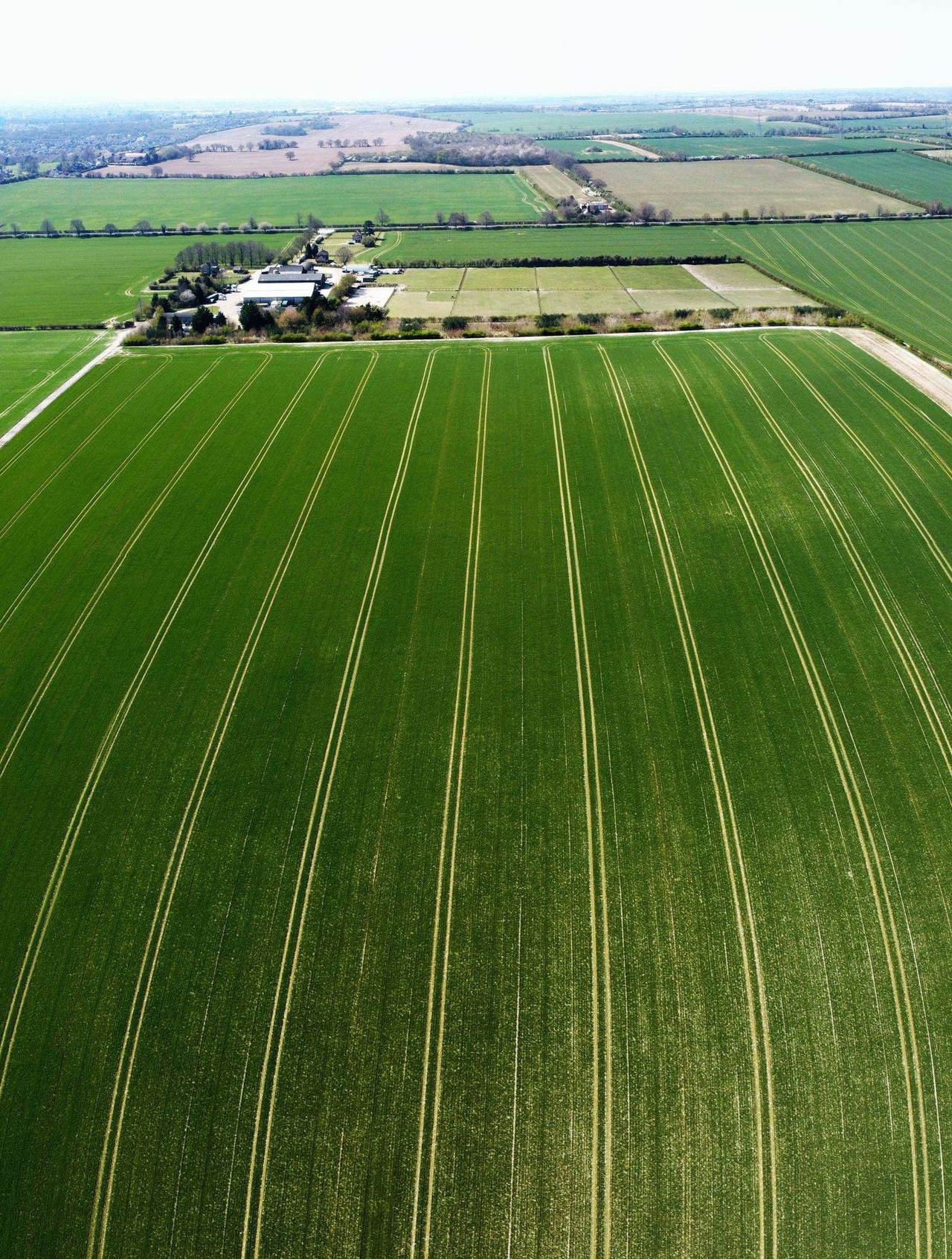
The Environmental Land Management schemes (ELMS), comprising the Sustainable Farming Incentive, Countryside Stewardship and Landscape Recovery, are now the central mechanism for paying farmers for environmental outcomes in England. As government looks to expand participation, an obvious question follows: is the underlying data and systems estate ready for AI to play a bigger role?
The short answer: not yet for high-stakes decisions, but genuinely ready for carefully bounded use cases.
The Core Problem Isn't a Lack of Data
ELMS and its surrounding agencies sit on a surprisingly rich data estate. The Rural Payments Agency updates around a million land parcels a year using aerial and satellite imagery. Natural England already runs production-grade machine-learning models for land cover and habitat mapping, with published performance data and transparency records. A national hydrology API serves data from thousands of monitoring stations. Government even has a live pilot testing an AI model to identify land parcels that haven't changed and don't need manual re-assessment.
So the constraint isn't a shortage of useful data. It's a set of foundational areas that are already on the roadmap and represent clear opportunities to strengthen:
- Modernising the transactional backbone. The National Audit Office noted in 2024 that the core rural payments system was still running on its existing infrastructure, with a full replacement service due by 2028, a significant modernisation already in motion.
- Building out outcome measurement. The mechanisms to measure whether scheme actions are delivering environmental benefit are still developing, a natural next investment for any AI model that would need to learn from outcomes, not just land cover.
- Strengthening metadata quality. Some datasets would benefit from more consistently automated "last updated" fields, which would help any tool that needs to know how current its training data is.
- Streamlining access. Restricted farm-level data, licensing conditions on Ordnance Survey-derived datasets, and varied API patterns are the kind of friction that a coordinated data-product approach could resolve.
- Growing in-house AI capability. A 2025 cross-government digital review pointed to the value of a dedicated AI and data-science function to help operationalise use cases at scale, a capability many departments are actively building.
Where AI Already Makes Sense
Several use cases are low-risk and already showing value: from flagging land parcels that likely haven't changed (already being piloted), to supporting compliance pre-screening and evidence review, to guidance tools for farmers and advisers. The common thread across all of them: these tools support human judgement rather than replace it, and none make a final decision that affects a farmer's payment or standing. Our view is that parcel-change triage is the natural place to start, precisely because RPA is already validating a similar model — proving value on an existing initiative is a faster, lower-risk path than opening a new use case from scratch.
Where AI Should Not Go Yet
Fully automated eligibility decisions, payment determinations, or any model that materially affects a farmer's rights or finances without strong human review, transparency and a right of challenge. This isn't overcaution. It aligns directly with existing UK government guidance on automated decision-making and data protection law, which places strict limits on solely automated decisions with legal or significant effects on people.
What "AI-Ready" Actually Requires
Government's own guidance on building AI-ready datasets is a useful yardstick: treat key datasets as proper "data products" with named owners, robust metadata, clean APIs, and clear documentation of data lineage, known bias and update frequency. Against that standard, ELMS's geospatial and environmental data already scores well. Its transactional core and its outcome-measurement layer have further to go, representing the clearest near-term opportunity for investment.
A sensible path forward treats ELMS as a two-to-four-year AI-enablement programme, not a switch to flip: strengthen the data foundations first, prove value through bounded, human-reviewed pilots, and build governance in from day one, with higher-trust automation only considered once accuracy, fairness and legal robustness are demonstrated. The specific sequencing of that roadmap is something we design with each client around their own systems and priorities.
The Bottom Line
ELMS has real AI potential, arguably more than most government schemes, given its geospatial data maturity. But the sensible sequence is deliberate: strengthen the data foundations, prove value through low-risk pilots, and treat AI as a two-to-four-year enablement programme rather than something to bolt onto core scheme administration today. Rushing the sequence, putting AI in charge of decisions that affect farmers' payments before the outcome data and governance exist to support it, is the one path that would genuinely undermine trust in the scheme.